One of the brain's main roles is to allow a person to think, remember, reason, and judge. After a brain injury, a person may be less able to coordinate sequential activities (apraxia), process thought (agnosia), or use language (aphasia). At first, therapy may be provided by medical professionals, physical therapists, and occupational therapists, but it often requires longer-term support by family and friends.
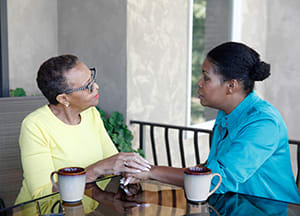
Coordinating functions
Coordinating functions can be hard for a person with a brain injury. Even a simple task, such as combing hair, may be hard. It may need to be broken into steps. The team can teach you how to help the person.
You can help:
- Find out what your loved one is working on. Ask them to do the task. Allow plenty of time.
- Break all tasks into simple steps.
- Change topics or tasks if your loved one gets confused.
Improving memory
One goal is to help people know where they are. Put up signs to label the bathroom, closet, and doorway. Put up maps of the person's room or the gym. Names of family and therapists may be on a daily schedule or in a journal.
Here are some ways you can help:
- Keep visits short. But try to visit often.
- Say who you are when you greet your loved one. Ask the same questions often.
- Look at family photo albums with the person.
Relearning language skills
A person may have trouble understanding or using words. They may need to use gestures or other ways to communicate such as eye blinks. To help a person relearn words, a therapist may point to an object and ask its name. If a person has physical trouble speaking, exercises may help. A speech therapist may show how to form the lips and mouth to make certain sounds.
Altered speech functions can be frustrating. It is important for family and friends to be supportive.
Here are ways you can help:
- Use picture flash cards with the person.
- Speak slowly. Use common words.
- Speak in simple sentences. Stick to a single idea or action.
- Ask yes-or-no questions.
- Give the person time to understand you and respond.
- Bring the person back to the main topic.
- Don't “talk down” to the person. And don't ignore them.
- Keep calm if your loved one gets upset or agitated.
Items for rehab
Bring some things to rehab that hold meaning for the person:
- Photos of family or friends
- Plants and knickknacks
- Favorite clothes
- Posters
- Music
Online Medical Reviewer: Anne Fetterman RN BSN
Online Medical Reviewer: Joseph Campellone MD
Online Medical Reviewer: Raymond Kent Turley BSN MSN RN
Date Last Reviewed: 09/01/2025
© 2000-2026 The StayWell Company, LLC. All rights reserved. This information is not intended as a substitute for professional medical care. Always follow your healthcare professional's instructions.Related Articles

Problems with the Senses After Brain Injury
Sometimes an injury damages the part of the brain that controls balance, sight, or hearing. Or memory loss may keep a person from remembering certain sights, sounds, smells, or tastes. Some people have trouble handling abstract ideas, like time, or they may simply lose track of what they are doing.
Physical Problems After Brain Injury
A traumatic brain injury can affect other parts of the body too. As a result, people who have a brain injury may have little or no control over their bodies. Read on to learn more.
Taking Care of the Family After a Loved One's Brain Injury
Any brain injury may lead to some changes in the affected person and their family members. Read this to learn ways to keep your family moving ahead.
Behavior Changes After Brain Injury
After a brain injury, a person may behave in new or different ways and may have personality changes. Here are things to expect and how you might help.