A seizure results from a sudden rush of abnormal electrical signals in the brain. Symptoms may range from a minor daze to uncontrollable muscle spasms (convulsions). In many cases, the person will faint (lose consciousness). A seizure can be caused by a high fever, head injury, medicine reaction, stroke, infection, or condition such as epilepsy.
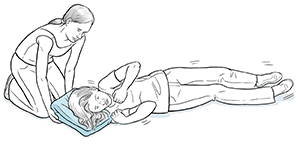
Step 1. Protect the head
Use these steps if you see someone having a seizure:
-
Help the person to the floor if they start losing muscle control. Turn them on their side. This is to help them breathe better. It also helps prevent choking or having a foreign object get into their airway (aspiration).
-
Protect the person's head from injury by placing something soft under it, such as folded clothes. Also move any objects away from the person.
-
Don't cause injury by restraining the person or by placing anything in their mouth. Don't try to hold the person's tongue.
-
Remove any eyeglasses.
Step 2. Preserve their dignity
-
Clear away bystanders.
-
Reassure the person. They may be confused, drowsy, or hostile when coming out of the seizure.
-
Cover the person or provide dry clothes if muscle spasms have caused a loss of bladder control.
Step 3. Check for injury
-
Make sure the person's mental state has returned to normal. One way to do this is to ask them their name, the year, and your location.
-
Injuries can occur to the head, mouth, tongue, or body.
-
Check to see if the person is wearing a medical information bracelet or necklace with instructions.
Step 4. Call 911
Call 911 right away if:
-
The seizure lasts longer than 5 minutes (timing the seizure and recovery time is helpful in many cases)
-
A second seizure occurs
-
The person doesn’t regain consciousness
-
The person is pregnant or has diabetes or heart disease
-
The person has no history of seizures
-
The person has an injury during the seizure
Online Medical Reviewer: Anne Fetterman RN BSN
Online Medical Reviewer: Joseph Campellone MD
Online Medical Reviewer: Raymond Kent Turley BSN MSN RN
Date Last Reviewed: 12/01/2022
© 2000-2025 The StayWell Company, LLC. All rights reserved. This information is not intended as a substitute for professional medical care. Always follow your healthcare professional's instructions.Related Articles

Safety During a Seizure
Let family and friends know what to expect and how to react when you have a seizure. This helps keep them calm and you safe. Here are some pointers for loved ones.
Partial Seizures: Know What to Do
Because seizures may happen at any time, it helps to be prepared. This is true even if medicine usually keeps your seizures under control. Start by telling those you live and work with about your health condition. Make sure they know what to do if a seizure happens
Seizure: New Onset with Unknown Cause (Adult)
You've had a seizure. A seizure happens when a burst of electrical activity occurs in the brain. Here's what to know about caring for yourself at home.
Epilepsy
Epilepsy is a seizure disorder that affects thousands of adults and children. A seizure is when the brain has a burst of abnormal electrical signals over a short period of time. These signals cause the body and brain to react in certain ways. This video discusses the causes of epilepsy and what treatments are available.