Good nutrition in a baby's first year is important for healthy growth and development. This is a time of many
changes for your baby. For example, your baby will move from drinking breast milk or formula to eating solid
foods. And feeding is a time for bonding with your baby.
|
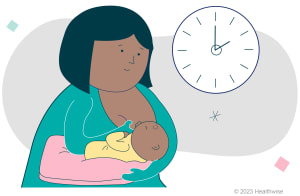
Ages 0 to 5 months: For about the first 6 months, breast milk or iron-fortified infant |
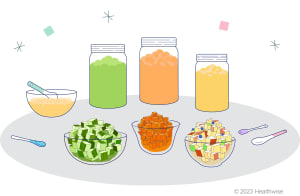
Ages 6 to 12 months: At about 6 months, babies are often ready to try cooked, soft food. They |
How can you feed your baby in the first year?
Feeding your baby for months 0 to 5

-
Feed your baby whenever they are hungry.
-
Look for signs of hunger such as hand-sucking or lip-smacking.
-
Your baby may be full if they slow down or turn away while feeding.
-
If you're breastfeeding, ask your doctor if your baby needs vitamin D or another supplement.
Introducing solid foods
-
Offer small portions. A serving might be 1 to 2 tablespoons at first.
-
You can give your baby food that is blended, mashed, or soft and cut small. Try soft vegetables,
iron-fortified infant cereals, proteins, and fruits. -
Maybe you'll feed your baby with a small spoon. Or your baby may be able to do it on their own. This may
vary by the meal. -
When your baby can easily eat soft foods, try chopped or ground food.
Serving snacks and new foods
-
Try offering food 2 or 3 times a day. Breast- or bottle-feed in between those times.
-
Offer a variety of foods. Try new colors, textures, and flavors of food. You may have to offer a new food
many times before your baby accepts it.
Practicing safe and healthy feeding

-
For foods that may cause an allergic reaction, introduce them a few days apart. These foods include nut
butters, milk, eggs, and wheat. Watch for signs of allergic reactions, such as hives, swelling, and
vomiting. -
To introduce a food that may cause an allergic reaction, try giving a small amount with a food your baby
has had before. For example, try mixing some peanut butter into oatmeal. -
Avoid foods that may cause your baby to choke. Cut or smash hot dogs and grapes into small sizes, and cook
hard vegetables like carrots. -
Feed your child solid food while they are sitting up in a high chair. Have an adult with your child to
help prevent choking. -
Look for signs that your baby is full. Stop if your baby is full or doesn't like the food.
-
At about 6 months, once they're eating solid foods, let your baby drink from a cup. Breast milk, formula,
and water are the best options. Start with 4 to 8 ounces a day.
How can you introduce a bottle to a breastfed baby?
Experts recommend feeding your baby only breast milk for the first year. Using a bottle may help all
caregivers feed your baby. Talk to your doctor if you plan to switch from breastfeeding to bottle-feeding.
Here are some tips.
|
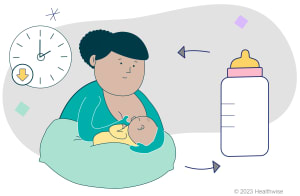
Slowly reduce the number of times you breastfeed each day. Offer the bottle before each |
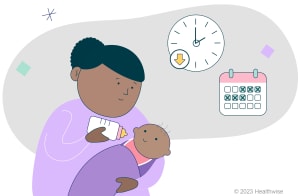
Wean your baby slowly. Pumping breast milk will allow you to save milk to use later in a bottle. |
When should you call for help?

for changes in your child's health, and be sure to contact your doctor if:
|
|
|
|
|
|
|
|
|
Follow-up care is a key part of your child's treatment and safety. Be sure to make and go to all
appointments, and call your doctor if your child is having problems. It's also a good idea to know your
child's test results and keep a list of the medicines your child takes.
Current as of: October 24, 2023
Content Version: 14.0
Care instructions adapted under license by your
healthcare professional. If you have questions about a medical condition or this instruction, always ask
your healthcare professional. Healthwise, Incorporated disclaims any warranty or liability for your use of
this information.
Related Articles

Feeding Guide for the First Year
It's important to feed your baby a variety of healthy foods at the correct time. Learn more with this helpful guide.
Infant Feeding Guide
How much, what, and when to feed your baby can seem daunting. But this cheat sheet will give you the information you need to start your baby on the right nutritional path.
Infant Nutrition
Choosing how to feed your baby is an important decision that has life-long effects for your baby and for you.

Breastfeeding: Getting Started
The first weeks of breastfeeding should be considered a learning period for both you and your baby. Here's what you need to know.