It's important to care for and protect your access to help it last. A problem such as an infection or a blood clot may make your access unusable. This may happen more often with an arteriovenous graft than with an arteriovenous fistula. If this occurs, you may need a new access. Follow these guidelines to help protect your access.
Watching for problems
Contact your doctor right away if you:
- Can't feel the blood flowing in the access (this sensation is called a thrill).
- Have pain or numbness in your hand or arm.
- Have bleeding, redness, a bluish color, or warmth around your access.
- Notice your access suddenly bulging out more than usual (a slight bulge is normal).
- Have a fever of
100.4 °F (38 °C) or higher, or as advised by your doctor.
Follow these and any other guidelines you’re given
- Wash your hands often.
- Do not wear tight clothes or jewelry around your access.
- Do not sleep on your access area.
- Do not let anyone take your blood pressure on or draw blood from the arm with the access. Also don't let anyone put I.V. (intravenous) lines into it.
- Do not get the area wet. Ask your nurse or doctor how to protect the area around the catheter incision and about using a special protective cover when you shower.
- Protect your access from being scratched, hit, or cut.
- Do not carry anything heavy or do anything that would put pressure on the access.
- Check the area every day for signs of an infection such as redness, pain, and swelling. If you have any of these symptoms, a fever, or flu-like symptoms, call your doctor right away.
- Keep the access area clean.
- Shower only after your AV fistula or AV graft has completely healed.
- Wash the access area every day with antibacterial soap and water or as advised by your doctor.
- Change the dressing as often as your doctor tells you to. Always keep the dressing clean and dry. Make sure you have plenty of dressing supplies at home in case you need to change it.
Feeling for your thrill
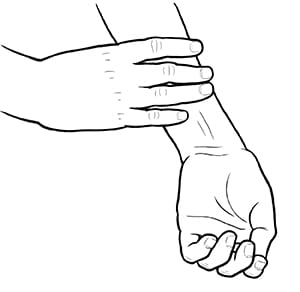
If you put your fingers over your access, you should feel the blood rushing through it. This is called a thrill, and it feels like a vibration. Feel for the thrill as often as you're told, usually once or twice a day. If you can't feel it, tell your doctor right away. Blood may not be flowing through your access the way it should.
Important numbers
Write the names and numbers of your health care providers below or have them programmed into your cell phone. That way, you will know how to get in touch with them. Be sure you know how to contact them after office hours and on weekends and holidays, too.
Doctor:
Name ___________________ Phone ___________________
Surgeon:
Name ___________________ Phone ___________________
Dialysis Center:
Name ___________________ Phone ___________________
How daily issues affect your health
Many things in your daily life impact your health. This can include transportation, money problems, housing, access to food, and child care. If you can't get to medical appointments, you may not receive the care you need. When money is tight, it may be difficult to pay for medicines. And living far from a grocery store can make it hard to buy healthy food.
If you have concerns in any of these or other areas, talk with your health care team. They may know of local resources to assist you. Or they may have a staff person who can help.
Online Medical Reviewer: Marianne Fraser MSN RN
Online Medical Reviewer: Raymond Kent Turley BSN MSN RN
Online Medical Reviewer: Walead Latif MD
Date Last Reviewed: 09/01/2025
© 2000-2026 The StayWell Company, LLC. All rights reserved. This information is not intended as a substitute for professional medical care. Always follow your healthcare professional's instructions.Related Articles

Hemodialysis Access Bleeding
You have a hemodialysis access in your arm, either an arteriovenous (AV) fistula or an artery to vein graft. It has been bleeding. Blood needs to flow freely through the fistula or graft. As part of your treatment, you are also taking medication that thins your blood. This makes you bleed more easily. It is important to stop your fistula or graft from bleeding as soon as possible.
Living with Your Graft for Hemodialysis
Watch this clip and learn how to properly care for your AV graft to ensure it is kept infection-free and in good working order.
Creating a Hemodialysis Access
Before hemodialysis can be done, a way for blood to leave and return to your body (an access) is needed. A hemodialysis access is often made in your arm. The two main types of accesses are an arteriovenous fistula (AV fistula) and an arteriovenous graft (AV graft).
Caring for Your Central Vein Access
It’s important to care for your central venous access device correctly. Here's how.