Problems with the veins in the legs may lead to chronic venous insufficiency (CVI). CVI means that there's a long-term problem with the veins not being able to pump blood back to your heart. When this happens, blood stays in the legs. This causes leg swelling and aching.
Two problems that may lead to CVI are:
-
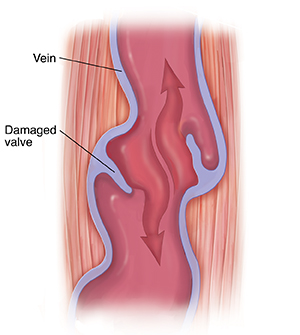
Damaged valves. Valves keep blood flowing from the legs through the blood vessels and back to the heart. When the valves are damaged, blood doesn't flow as well.
-
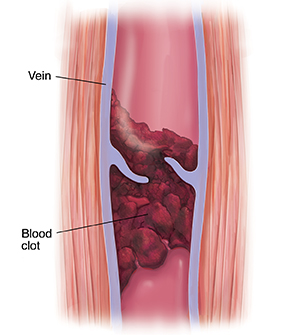
Deep vein thrombosis). Blood clots may form in the deep veins of the legs. This may cause leg pain, redness, and swelling. It may also block the flow of blood back to the heart. Get medical care right away if you have these symptoms.
Call 911
A blood clot in the leg can also break off and travel to the lungs. This is called a pulmonary embolism (PE). In the lungs, the clot can cut off blood flow. This is a medical emergency and may cause death. Call
-
Chest pain
-
Trouble breathing
-
Fast heartbeat
-
Fainting
Knowing the symptoms
Be aware of the following:
-
If you stand or sit with your feet down for a long time, your legs may ache or feel heavy.
-
Swollen ankles (very common)
-
As swelling increases, the skin over your ankles may:
-
Show red spots or a brownish tinge
-
Feel leathery or scaly
-
Start to itch
-
-
If swelling isn't controlled, an open sore may form.
What you can do
CVI can’t be cured. But controlling leg swelling can reduce the risk of sores. Follow these tips:
-
Increase blood flow back to your heart by:
-
Raising (elevating) your legs
-
Exercising daily
-
Wearing elastic (compression) stockings
-
-
Boost blood flow in your legs by losing extra weight.
-
Maintain good skin care.
-
If you must stand or sit in one place for a long time, keep your blood moving by:
-
Wiggling your toes
-
Shifting your body position
-
Rising up on the balls of your feet
-
Wearing compression stockings
-
Online Medical Reviewer: Chris Southard RN
Online Medical Reviewer: Marianne Fraser MSN RN
Online Medical Reviewer: Melinda Murray Ratini DO
Date Last Reviewed: 04/01/2024
© 2000-2025 The StayWell Company, LLC. All rights reserved. This information is not intended as a substitute for professional medical care. Always follow your healthcare professional's instructions.Related Articles

Chronic Venous Insufficiency
Detailed information on chronic venous insufficiency, including causes, symptoms, diagnosis, and treatment.
Understanding Leg Vein Problems
Leg veins carry blood from your feet back to your heart. If a vein is damaged, blood flow back to the heart is reduced. As a result, you may develop vein problems in your legs.
Chronic Venous Insufficiency: Treating Ulcers
If leg swelling due to chronic venous insufficiency isn't controlled, an ulcer (open wound) can form. Here's how to treat them.
Varicose Veins
Varicose veins are swollen, enlarged veins most often found in the legs. They are often blue or purple and may bulge, twist, and stand out under the skin. Read on to learn how to care for them.