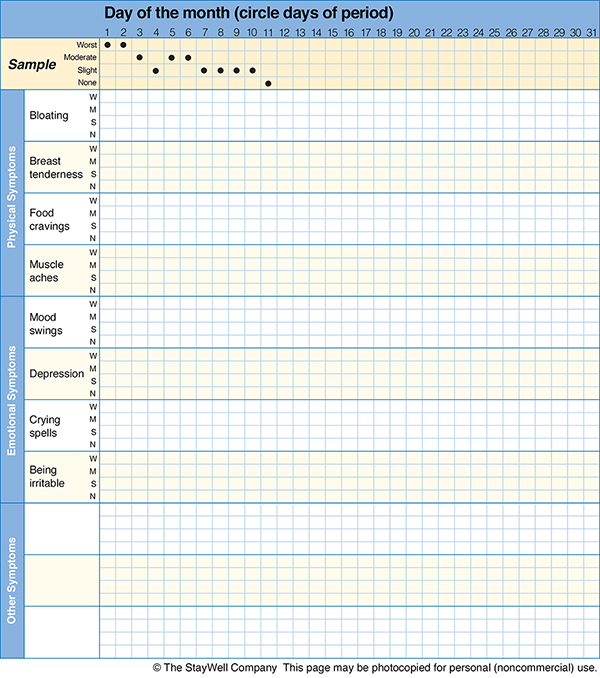
Track your premenstrual syndrome (PMS) symptoms to better know when they may occur. Rank how serious each symptom is from “worst” to “none.” Track any other symptoms in the blank rows. At the top of the chart, circle the days of your period. This will help you note the weeks of your cycle.
Self-tracking menstrual apps
Talk to your doctor about using self-tracking menstrual health apps. You can get these on Google Play Store and Apple iTunes. They combine your health information, calendar tracking, and menstrual symptoms. Almost all the apps use this tracking:
-
Body metrics like:
-
Weight
-
Basal body temperature
-
-
Period details like:
-
Spotting, bleeding, or flow
-
Length
-
Discharge or clots
-
-
Cervical mucus details like:
-
Quality
-
Amount
-
Appearance
-
-
Physical symptoms like:
-
Headache or backache
-
Cramps or bloating
-
Skin problems (acne)
-
Hot flashes
-
Breast symptoms such as tenderness
-
-
Emotional health like:
-
Mood swings or irritability
-
Fatigue
-
Stress, anxiety, or depression
-
-
Behaviors like:
-
Sleep patterns
-
Cravings and appetite
-
Sex drive
-
-
Activities like:
-
Exercise
-
Meditation
-
Nutrition
-
Featured in
Online Medical Reviewer: Donna Freeborn PhD CNM FNP
Online Medical Reviewer: Heather Trevino
Online Medical Reviewer: Irina Burd MD PhD
Date Last Reviewed: 04/01/2025
© 2000-2025 The StayWell Company, LLC. All rights reserved. This information is not intended as a substitute for professional medical care. Always follow your healthcare professional's instructions.Related Articles

Understanding PMS and Your Cycle
PMS is a real condition caused by changing levels of hormones during your monthly period. No one knows why some women have PMS and others don't.
Menstrual Conditions
Detailed information on the most common menstrual conditions, including premenstrual syndrome (PMS), premenstrual dysphoric disorder, amenorrhea, dysmenorrhea, and menorrhagia
Premenstrual Syndrome (PMS)
Premenstrual syndrome (PMS) is a group of emotional and physical symptoms many women have in the days before their period starts. Lifestyle changes and sometimes medicines can help manage symptoms.
Premenstrual Syndrome
Premenstrual syndrome (PMS) is a group of symptoms that occur in some women during the second half of their menstrual cycle. These symptoms include irritability, anxiety, and depression. This video explains what how PMS develops and what you can do to minimize its effects.