Urinary incontinence is when you accidentally leak urine. It’s common in pregnant women. Four in 10 women get it during or after pregnancy. It happens because of weakened bladder muscles. Urine often leaks when you laugh, cough, or sneeze. This can make you feel embarrassed and distressed. It can also raise your risk for postpartum depression. But the condition can be treated. Bladder control often comes back after your body has had time to heal from pregnancy and childbirth.
What causes loss of bladder control during and after pregnancy?
As your baby grows inside your womb (uterus), it pushes down on your bladder and pelvic muscles. This can make them weaker. Giving birth through the vagina can also weaken the muscles. It can also harm nerves in the bladder. In some cases, the pelvic organs slip out of place (pelvic organ prolapse). They can’t support your bladder as they should. A sagging bladder can stretch where the urethra opens. This can cause urine to leak. The urethra is the tube that carries urine out of the body.

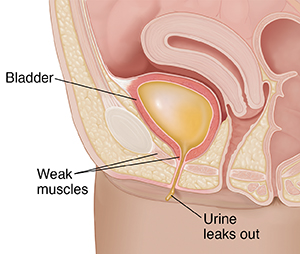
Other things can raise your risk for urinary incontinence after birth. They include:
-
Being older.
-
Weighing too much (obesity).
-
Having a larger baby.
-
Family history.
-
Having a longer labor.
A urinary tract infection and other problems can also cause urine to leak. Be sure to have your symptoms checked by your doctor to rule out other problems.
Symptoms of urinary incontinence after birth
Symptoms include:
-
Leaking urine when you laugh, cough, or sneeze.
-
Sudden, strong urge to pee.
-
Waking at night to pee.
-
Pain when peeing.
Possible complications of urinary incontinence after birth
Women with urinary incontinence after giving birth are twice as likely to get postpartum depression. Postpartum depression can affect you, your child, and your partner. Tell your doctor right away if you are feeling depressed after giving birth.
When to contact your doctor
Contact your doctor right away if you have new symptoms or if symptoms get worse.
Featured in
Date Last Reviewed: 06/01/2025
© 2000-2026 The StayWell Company, LLC. All rights reserved. This information is not intended as a substitute for professional medical care. Always follow your healthcare professional's instructions.Related Articles

Understanding Fecal Incontinence After Pregnancy (Postpartum)
Fecal incontinence is when you accidentally leak stool. It often occurs after vaginal birth.
Urinary Incontinence
Urinary incontinence is the loss of urine control. It may be a short-term problem caused by another health issue or a long-term problem that you’ll have to manage. Learn more about this condition, including what causes it, who is at risk, what the symptoms are, and how it's diagnosed and treated.
Urinary Incontinence
Urinary incontinence is the loss of urine control. It may be a short-term problem caused by another health issue or a long-term problem that you’ll have to manage. Learn more about this condition, including what causes it, who is at risk, what the symptoms are, and how it's diagnosed and treated.
What Is Stress Urinary Incontinence?
Stress urinary incontinence is a common type of bladder control problem in women. Read on to learn more.