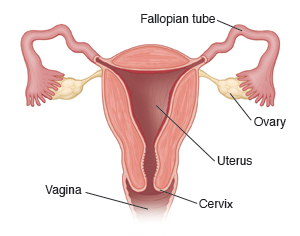
Pelvic pain is pain felt in the lowest part of the belly (abdomen) and between the hipbones. The pain may occur suddenly and recently (acute). Or the pain may last for 6 months or longer (chronic).
There are many possible causes of pelvic pain. The pain may be from a problem in the female reproductive system. Or it may be from a problem in the digestive, urinary, or musculoskeletal systems.
Based on your visit today, the exact cause of your pelvic pain is not certain. Your condition doesn't seem to be serious at this time. But it is important for you to keep watching for any new symptoms or worsening of your condition.
General care
Your healthcare provider may advise a number of ways to help manage your pain. These can include the following:
-
Take over-the-counter pain medicine. Stronger pain medicine may also be prescribed, if needed.
-
Apply heat to the pelvic area. Use a heating pad or a hot pack. Taking a hot bath may also help.
-
Get plenty of rest.
-
Make certain lifestyle changes. These can include practicing good posture and getting regular exercise. Studies have shown that these changes help reduce pelvic pain in some people.
-
See a physical therapist or pain specialist. These healthcare providers can discuss other ways to manage pain with you.
-
Use acupressure or acupuncture.
Follow-up care
Follow up with your healthcare provider, or as advised.
When to get medical advice
Call your healthcare provider right away if any of the following occur:
-
Fever of 100.4°F (38°C) or higher, or as directed by your healthcare provider
-
Pain gets worse or you have sudden, severe pain or new pain
-
Nausea, vomiting, sweating, or restlessness
-
Dizziness or fainting
-
Abnormal vaginal discharge
-
Abnormal vaginal bleeding (especially bleeding after menopause)
Featured in
Online Medical Reviewer: Daniel N Sacks MD
Online Medical Reviewer: Donna Freeborn PhD CNM FNP
Online Medical Reviewer: Heather Trevino
Date Last Reviewed: 12/01/2022
© 2000-2025 The StayWell Company, LLC. All rights reserved. This information is not intended as a substitute for professional medical care. Always follow your healthcare professional's instructions.Related Articles
Pelvic Pain
Pelvic pain is a challenging condition that can be due to many possible causes.

Pelvic Pain in Pregnancy: Unclear (2–3 Trimester)
Mild pelvic pressure or heaviness is very common in the later stages of a healthy pregnancy. This is due to the growing uterus. Although the exact cause of your pain is not certain, it doesn't seem to be dangerous. Here's what you need to know about home care.
Pelvic Congestion Syndrome
Pelvic congestion syndrome is a condition that causes chronic pelvic pain. It is thought to be caused by problems with the veins in the pelvic area. The pelvic area is inside the lower part of your belly (abdomen).
Pelvic Congestion Syndrome
Pelvic congestion syndrome is a condition that causes chronic pelvic pain. It is thought to be caused by problems with the veins in the pelvic area. This is the lower part of your abdomen.