With fetal growth restriction, the growing baby (fetus) is smaller than normal. This means the baby is not growing at a normal rate.
Causes of fetal growth restriction
Fetal growth restriction happens when a baby doesn't get enough oxygen and nutrition in the uterus. It's also called intrauterine growth restriction. Possible causes include certain health problems you may have, such as:
-
High blood pressure.
-
Heart disease.
-
Kidney disease.
-
Diabetes.
-
Severe anemia.
-
Sickle cell disease.
Other possible causes include the baby having:
-
A genetic disorder.
-
An infection.
This condition is much more likely if you:
-
Smoke.
-
Drink alcohol.
-
Use drugs.
-
Are pregnant with more than one baby.
Diagnosing fetal growth restriction
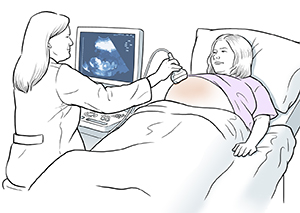
During routine visits, you and your baby are closely watched. This is done with ultrasound tests. The height of your uterus (fundal height) is also measured. A baby with fetal growth restriction will have smaller ultrasound and fundal height measurements. Doppler ultrasound is used to measure the blood flow from the placenta. This is to see how well the placenta is working. You may have a test (amniocentesis) to look for a genetic problem or infection. It tests a fluid sample taken from around the baby (amniotic fluid).
Treating fetal growth restriction
The growth of a baby with this condition will be closely watched.
Treatment depends on the cause. If you smoke, drink alcohol, or use drugs, it's very important to stop. Treatment may also include:
-
Self-care. Eat a healthy, well-balanced diet with a calorie intake that is advised for pregnancy. Keep all your prenatal visits with your doctor.
-
Medicines. These treat health problems, such as high blood pressure.
-
Early delivery. This may be needed if the baby’s health is in danger.
Talk with your doctor about the best treatment for you and your baby.
Long-term concerns
A baby diagnosed with fetal growth restriction may have health problems after birth. These include low blood sugar, trouble fighting infections, or difficulty keeping a normal body temperature. With treatment and close follow-up, babies may catch up in growth. In some cases, babies have long-term health problems. Your doctor can tell you more.
Featured in
Online Medical Reviewer: Donna Freeborn PhD CNM FNP
Online Medical Reviewer: Heather M Trevino BSN RNC
Online Medical Reviewer: Irina Burd MD PhD
Date Last Reviewed: 07/01/2025
© 2000-2026 The StayWell Company, LLC. All rights reserved. This information is not intended as a substitute for professional medical care. Always follow your healthcare professional's instructions.Related Articles

Failure to Thrive (FTT) in Children
Failure to thrive (FTT) is slow physical development in a baby or child. It's caused by a baby or child not having enough nutrition.
Fetal Growth Restriction
Fetal growth restriction is a condition in which an unborn baby is smaller than expected for the number of weeks of pregnancy (gestational age).
Small for Gestational Age
Small for gestational age is a term used to describe babies that are smaller than normal for the number of weeks of pregnancy. These babies have birth weight below the 10th percentile. This means they are smaller than many other babies of the same gestational age.
Understanding Preterm Labor
Going into labor before your 37th week of pregnancy is called preterm labor. Preterm labor can cause your baby to be born too soon. This can lead to a number of health problems that may affect your baby.