A skeleton in progress
-
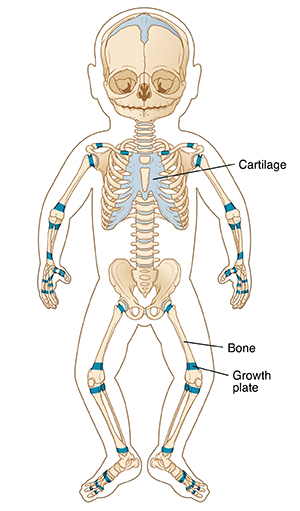
In babies, the bones in the head aren't fused together. This allows the head to be flexible so it can pass through the birth canal during childbirth. The bones in the skull don’t fully fuse until ages 1 to 2.
-
Children have more dense, elastic tissue (called cartilage) in their joints and other bony structures (such as the ribs). This allows the bones to continue to develop and grow as the child grows. This extra cartilage develops into bone over time. By about age
16 , most extra cartilage has matured into bone. -
Children have growth plates in each long bone. A growth plate is an area of soft bone at each end of the long bones. Growth plates allow the bone to grow as the child grows. The growth plates fuse by the time a child is
14 to 18 years old.
Featured in
Online Medical Reviewer: L Renee Watson MSN RN
Online Medical Reviewer: Raymond Turley Jr PA-C
Online Medical Reviewer: Thomas N Joseph MD
Date Last Reviewed: 08/01/2024
© 2000-2026 The StayWell Company, LLC. All rights reserved. This information is not intended as a substitute for professional medical care. Always follow your healthcare professional's instructions.Related Articles

Broken Bones: A Note About Children
A child’s bones heal the same way as an adult’s. But since a child’s bones are still growing, there are a few special concerns.
Skeletal Anatomy (Child)
Learn the differences in the skeletons of children and adults.
Anatomy of a Newborn Baby's Skull
Detailed anatomical information on the newborn skull.
Discharge Instructions for Craniosynostosis
Craniosynostosis happens when the bones in your baby's skull grow together, or fuse, too early. If the bones fuse too early, brain growth can be restricted. Or the shape of the head will be unusual. This can lead to developmental problems and sometimes seizures. Here are instructions for home care following surgery to correct this condition.