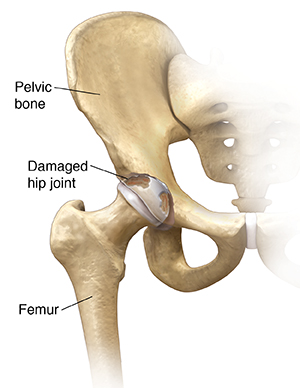
A joint is a place where 2 or more bones meet. The hip is a ball-and-socket joint. It's formed where the ball at the top of the thighbone (femur) rests in the socket in the pelvic bone. The hip joint allows the leg to move freely in many directions.
Hip osteoarthritis is a condition where parts of the hip joint wear out. It can lead to pain, stiffness, and limited movement.
What is osteoarthritis?
All joints contain a smooth tissue called cartilage. Cartilage cushions the ends of bones, helping them glide against each other. Hip osteoarthritis occurs when cartilage in the hip joint starts to break down and wear away. The ball and socket bones may then become exposed and rub together. The cartilage may become rough and pitted. It may start to wear away. This prevents smooth movement of the joint and can lead to pain.
Causes of osteoarthritis of the hip
Causes can include:
-
Wear and tear from normal use of the hip over time
-
Overuse of the hip during sports or work activities
-
Being overweight. This increases stress on the hip joint.
-
Hip injury
-
Hip joint infection
Symptoms of osteoarthritis of the hip
The main symptom of hip osteoarthritis is pain. The pain is most often felt in the groin area. It may also travel down the leg to the knee or to the back of the hip. The pain usually gets worse with activity, such as walking or climbing stairs. The pain may get better with rest. The joint may also be stiff first thing in the morning or after sitting or lying down. Stiffness usually gets better with movement.
Treating osteoarthritis of the hip
Osteoarthritis is a long-term (chronic) condition. Treatment usually focuses on managing symptoms. Treatment may include:
-
Over-the-counter or prescription medicines taken by mouth to help ease pain and swelling
-
Shots of medicine into the joint to help ease symptoms for a time
-
A weight-loss plan if you're overweight
-
A plan of physical therapy and exercises to improve strength and flexibility around the joint
-
Cold or heat packs to help ease pain and stiffness
-
Assistive devices that help with movement, such as a cane or a walker
-
Assistive devices that make activities of daily life easier, such as raised toilet seats or shower bars
If other treatments don’t do enough to ease severe symptoms, you may need surgery to replace the joint. This surgery replaces the hip joint with an artificial joint. It can help ease pain and stiffness and improve hip function.
When to call your healthcare provider
Call your provider right away if you have any of these:
-
Fever of 100.4°F (38°C) or higher, or as advised by your provider
-
Symptoms that don’t get better with prescribed medicines, or that get worse
-
New symptoms
Author: Michels, Karen
Online Medical Reviewer: Marianne Fraser MSN RN
Online Medical Reviewer: Melinda Murray Ratini DO
Online Medical Reviewer: Rajadurai Samnishanth Researcher
Date Last Reviewed: 04/01/2024
© 2000-2025 The StayWell Company, LLC. All rights reserved. This information is not intended as a substitute for professional medical care. Always follow your healthcare professional's instructions.Related Articles

Understanding Osteoarthritis of the Knee
Knee osteoarthritis is a condition where parts of the knee joint wear out. This can lead to pain, stiffness, and limited movement.
What Is Osteoarthritis?
Osteoarthritis is a disease that causes the cartilage in your joints to break down. Osteoarthritis becomes more common as people get older. Read on to learn more.
Osteoarthritis
Osteoarthritis happens when the cartilage in a joint becomes damaged and worn. This may be due to age, wear and tear, overuse of the joint, or other problems.
Hip Problems
The hip is one of the most stable joints in the body. But because it bears your body weight, it is more likely to develop arthritis because of the extra pressure. Another common hip problem is bursitis.