External bleeding occurs when the body’s protective skin is broken. In severe cases, blood loss may place the victim’s life in danger. Direct pressure usually stops bleeding, even the rush of blood from an artery.
When to call 911
Call
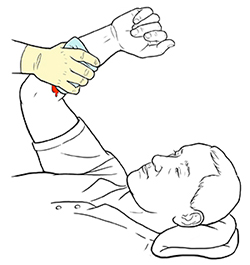
Apply direct pressure
-
Put on gloves or use other protection to prevent contact with the victim’s blood.
-
Press directly on the wound with a clean gauze patch or cloth.
-
Keep the pressure constant for at least 5 minutes. This allows the blood to thicken (clot), preventing more bleeding.
-
Don't lift the bandage to check on the bleeding until at least 5 minutes have passed.
Pinch off nosebleeds
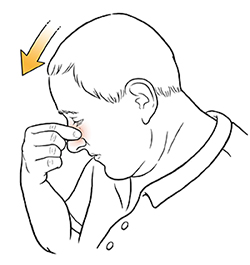
Reassure the person with the nosebleed and tell them to do the following:
-
Pinch the nostrils below the bone.
-
Tip the person's head slightly forward and sit quietly. Maintain pressure on the nose for at least 5 minutes.
-
Don't tilt the person's head backward. This may cause blood to run backward into the person's mouth and throat.
-
Don't destroy the clot by blowing or rubbing the nose after the bleeding stops.
Bleeding: How much is too much?
The victim’s age, body size, and overall health all help determine when bleeding becomes serious. Concentrate on the victim’s condition and appearance—not on the amount of blood lost. Bleeding from head wounds and nose bleeds can be dramatic while still being safe. Watch the victim for signs of shock. If any shock symptoms appear, blood loss is a threat to life.
Symptoms of shock include:
-
Pale, clammy skin
-
Racing pulse
-
Confusion or unconsciousness
-
Pulsing, spurting bleeding that can't be stopped with direct pressure
Online Medical Reviewer: Eric Perez MD
Online Medical Reviewer: Tara Novick BSN MSN
Online Medical Reviewer: Tennille Dozier RN BSN RDMS
Date Last Reviewed: 09/01/2022
© 2000-2025 The StayWell Company, LLC. All rights reserved. This information is not intended as a substitute for professional medical care. Always follow your healthcare professional's instructions.Related Articles

First Aid: Head Injuries
A strong blow to the head may cause swelling and bleeding inside the skull. The resulting pressure can injure the brain (concussion).
Nosebleed (Adult)
Most nosebleeds happen because of dry air or because of nose-picking. They can occur during a common cold or an allergy attack. Most aren't serious but sometimes you need to see a health care provider.
First Aid: Cuts and Scrapes
A break in the skin is an open door, inviting dirt and germs to enter your body and cause infection. Learn how to prevent infection with correct first-aid care.
Cuts and Wounds of the Nose
Most minor nose wounds can be handled at home, but a wound or bruise that also involves 1 or both eyes needs immediate medical attention.