Facts about the prostate gland
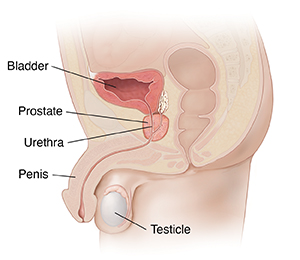
The prostate gland is about the size of a walnut. It's located just below the bladder, and it surrounds the urethra. This is a tube that carries urine and semen out of the body. The prostate is partly muscular and partly glandular. It has tubes (ducts) that open into the prostatic part of the urethra. It's made up of 3 lobes: a middle lobe, left lobe, and right lobe.
Function of the prostate gland
As part of the male reproductive system, the prostate gland’s main job is to secrete a slightly alkaline fluid that forms part of the seminal fluid. This is the fluid that carries sperm. During an orgasm, the muscular glands of the prostate help to propel the prostate fluid, and sperm that was made in the testicles, into the urethra. The semen then leaves the body out of the tip of the penis during ejaculation.
Featured in
Online Medical Reviewer: Marc Greenstein MD
Online Medical Reviewer: Raymond Kent Turley BSN MSN RN
Online Medical Reviewer: Rita Sather RN
Date Last Reviewed: 01/01/2023
© 2000-2026 The StayWell Company, LLC. All rights reserved. This information is not intended as a substitute for professional medical care. Always follow your healthcare professional's instructions.Related Articles

Prostate Anatomy
The prostate gland is part of the reproductive system for people who are assigned male at birth. Here are images of and details about the prostate gland.
What Do You Know About Prostate Health?
This quiz will help you build your knowledge of steps you can take to prevent prostate cancer.
Male Reproductive Anatomy
A diagram and explanation of the main parts of the male reproductive anatomy.
Prostate Cancer Screening
Screening for prostate cancer can help check if you have cancer. Screening tests often include a digital rectal exam (DRE) and a prostate specific antigen (PSA) blood test. Talk with your healthcare provider about the pros and cons of regular screening starting at age 50 or earlier if you are at higher risk.