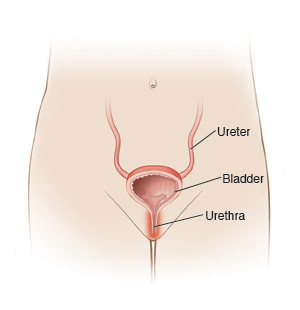
The urethra is the channel that passes urine from the bladder. In a girl, the opening of the urethra is above the vagina. In a boy, it's at the tip of the penis. Dysuria is having pain or a burning feeling in the urethra when peeing. Your child may get medicine to help ease pain.
Dysuria can be caused by anything that irritates or inflames the urethra. Examples include:
-
Chemical irritation. This is the most common cause of dysuria in young children. Soaps, bubble baths, or skin lotions can get inside the urethra. Symptoms will get better in 1 to 3 days after the last exposure.
-
Certain foods. Caffeine is the most common. High-potassium and hot, spicy foods can also cause irritation.
-
Bladder infection. A urine test can show this. The health care provider will treat a bacterial bladder infection with antibiotics. Make sure your child takes all of the medicine. They need to take it even when they start feeling better. Symptoms of a UTI usually go away within 24 to 72 hours of starting treatment. Children can also get a viral infection of the bladder. This will get better with time. You don't need antibiotics for a viral infection.
-
Inflammation in the outer vaginal area (rash or vaginal infection). Your child may be given a cream for this.
-
Vaginal infection. This may cause vaginal discharge and dysuria. A culture can diagnose it. Antibiotics may be needed to treat the infection.
-
Labial adhesions. These are a common cause of dysuria in young girls. Parts of the labia are attached together. A small tear can cause pain. The tear will get better on its own. But an estrogen cream can be used to help treat the adhesions.
-
Minor injury. These may result from from activities or self-exploration.
-
Medicines. Review all your child's medicines with your provider.
-
Bladder catheter. Having one for a long time can cause dysuria.
Other causes include dehydration and structural abnormalities of the urinary system.
In rare cases, dysuria is a result of genital injury from sexual abuse. If you have concerns about possible sexual abuse, contact your child's provider right away. Or call the National Child Abuse Hotline at 800-4-A-CHILD (800-422-4453) to get help.
How is dysuria diagnosed?
Your provider will ask about your child's medical history and do a physical exam. Your child may have test, including:
-
Urinalysis. The urine is checked for bacteria and other signs of infection. The urine is sent to a lab for a culture. This shows what kind of bacteria is in the urine. It can take 1 to 3 days to get the results back. The provider may think your child has a urinary tract infection (UTI). In that case they will likely start treatment before the lab results come back.
-
Ultrasonography. This can show if a child's urinary system did not form correctly before birth.
Home care
These tips will help you care for your child at home:
-
Wash the genitals gently with a washcloth and mild soapy water. Make sure soap doesn't get inside the urethra. Dry the area well.
-
If you think bubble bath soap caused the reaction, stop using bubble baths.
-
Use over-the-counter diaper creams to help with irritation in the genital area.
-
Change soiled diapers right away. Keep the genital region clean and dry.
-
Encourage your child to drink water. Have them stay away from foods and drinks that can cause bladder infections.
-
Make sure your child wipes from front to back after using the toilet. Wipe your baby from front to back during diaper changes.
-
Have your child wear loose-fitting underpants and clothing.
-
Regular urination and regular bowel movements may help reduce the risk of UTIs.
-
Soaking in warm water without soap for about 10 minutes can help ease pain. Repeat as needed.
Follow-up care
Follow up with your child's provider, or as advised. If the provider took a culture specimen, call for the result as advised.
When to contact your child's doctor
Contact your child's provider right away if:
-
Your child's symptoms don't go away after 3 days, or new symptoms appear.
-
Your child has a fever of 101°F (38.3°C) or higher, or as advised by the provider.
-
Your child can't pee due to pain.
-
You see increased redness or rash in the genital area.
-
There's discharge or bloody drainage from the penis or vagina.
Online Medical Reviewer: Dan Brennan MD
Online Medical Reviewer: Lalitha Kadali
Online Medical Reviewer: Raymond Kent Turley BSN MSN RN
Date Last Reviewed: 04/01/2025
© 2000-2025 The StayWell Company, LLC. All rights reserved. This information is not intended as a substitute for professional medical care. Always follow your healthcare professional's instructions.Related Articles

Dysuria With Uncertain Cause (Adult)
The urethra is the tube that allows urine to pass out of the body. Dysuria is the feeling of pain or burning in the urethra when you pass urine. Here's what you should know about caring for yourself at home.
Chemical Urethritis (Child)
This condition causes pain or a burning feeling when peeing. In children, it may be caused by soaps or bubble baths. Read on to learn more.
Dysuria
Dysuria is when you have pain when peeing. It's often described as a burning feeling. Learn more about this problem and how it can be treated.
Male Bladder Infection (Child)
Read on for details about caring for a male child with a bladder infection.