Most children have had at least one middle ear infection by age 2. Treatment may depend on whether the problem is acute or chronic. It also depends on how often it comes back and how long it lasts as well as the age and the health of your child.
Reducing risk factors
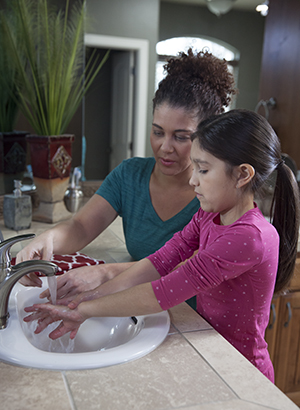
Some behaviors or things raise your child’s risk for an ear infection. Reducing these risks can help prevent ear infections. Here are some tips:
-
Make sure you wash your hands often. And start teaching your child how to wash their hands as soon as they are old enough.
-
Take your child to a smaller child care center. Fewer children means less contact with bacteria and viruses. Try to limit the use of any group child care, where germs can easily spread.
-
Keep your child away from crowds during cold and flu season.
-
Keep your child away from secondhand smoke and other irritants. Don’t let anyone smoke in your home or your car.
-
If your child has nasal allergies, do your best to control dust, mold, mildew, and pet hair and dander in the house.
-
If food allergies are a problem, identify the food that sets off the reaction. Help your child stay away from it.
-
Make sure your child is up-to-date on vaccines.
In your child's first year of life, you can also reduce the risk of ear infections by:
-
Breastfeeding for at least 3 months.
-
Not giving your child a pacifier after 6 months of age.
-
Not putting your child to sleep while sucking on a bottle.
Watching and waiting
If your child is diagnosed with an ear infection, the doctor may prescribe antibiotics right away or suggest a period of “watchful waiting.” This means not filling the prescription right away. Instead, you will first try medicines to ease your child’s symptoms, such as those for pain or a fever. Ask the doctor which over-the-counter medicines are safe to give your child. You’ll then wait to see if your child gets better.
If your child doesn't get better in a few days or develops new symptoms, such as a fever or vomiting, antibiotics will often be started. This will depend on your child's age and risk factors.
Online Medical Reviewer: Melinda Murray Ratini DO
Online Medical Reviewer: Riley Holtz RN BS
Date Last Reviewed: 06/01/2025
© 2000-2026 The StayWell Company, LLC. All rights reserved. This information is not intended as a substitute for professional medical care. Always follow your healthcare professional's instructions.Related Articles

Otitis Media, Wait-and-See, No Antibiotics (Child Over 6 Mo)
Your child has an infection of the middle ear. Sometimes the internal passage that drains fluid from the middle ear can become blocked. When the middle ear fills with fluid, bacteria or viruses may grow there, causing an infection.
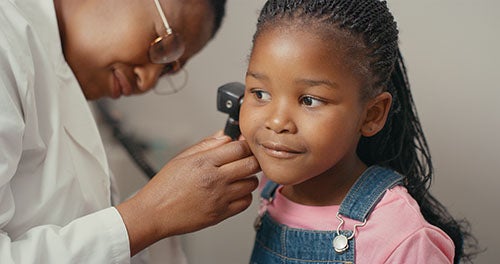
Understanding Middle Ear Infections in Children
Middle ear infections are most common in children under age 5. Crankiness, a fever, and tugging at or rubbing the ear may all be signs that your child has a middle ear infection, particularly if your child has a cold or viral illness.
Ear Infection (Child)
Fluid and pressure can build up in the middle ear because of a blocked eustachian tube. Bacteria or fungi can grow in the fluid and cause an ear infection.
Earache Without Infection (Child)
Earaches can happen without an infection. This can occur when air and fluid build up behind the eardrum, causing pain and reduced hearing.