There are different kinds of fats in the foods you eat. Fats can be saturated or unsaturated. When choosing fats, try choose unsaturated fats more often than saturated fats. Eating too much saturated fat can raise the risk of heart disease.
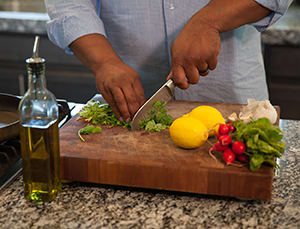
Choose unsaturated fats
Unsaturated fats are usually liquid at room temperature. They are healthier choices than saturated fats. There are two types of unsaturated fats:
- Polyunsaturated fats. These are found in fatty fish such as salmon and trout, as well as walnuts, flaxseeds, sunflower seeds, and vegetable oils such as sunflower, corn, and safflower oil.
- Monounsaturated fats. These are found in avocados, nuts, and oils such as olive, canola, and peanut oil. Some margarines and spreads are made with these oils.
Limit saturated fats
Saturated fats are found in animal-based foods and some tropical oils, such as coconut and palm oil. Eating too much saturated fat can increase your risk of heart disease. Foods high in saturated fat should be limited. Foods that contain a lot of saturated fat include:
- Fatty cuts of meat (lamb, ham, beef).
- Cookies and cakes.
- Cream, ice cream, sour cream, cheese, butter.
- Desserts with butter and cream.
- Sauces with butter and cream.
- Salad dressings with saturated fats.
- Foods that contain palm or coconut oil.
Avoid trans fat
Like saturated fat, trans fat is linked to heart disease. Trans fats are primarily created through hydrogenation, a process that turns liquid oils into solids like hard margarine and shortening. Some animal-based foods have small amounts of naturally occurring trans fats.
The FDA has banned adding partially hydrogenated oils to foods. Partially hydrogenated oils are the main dietary source of artificial trans fat in processed foods.
Online Medical Reviewer: Brittany Poulson MDA RDN CD CDE
Online Medical Reviewer: Diane Horowitz MD
Online Medical Reviewer: Heather M Trevino BSN RNC
Date Last Reviewed: 04/01/2025
© 2000-2026 The StayWell Company, LLC. All rights reserved. This information is not intended as a substitute for professional medical care. Always follow your healthcare professional's instructions.Related Articles

Understanding Fat and Cholesterol
Too much cholesterol in your blood can lead to blocked arteries. Eating foods that contain cholesterol can raise your blood cholesterol. Planning meals that are low in cholesterol and saturated fat helps reduce the level of cholesterol in your blood. Try to eat less than 200 mg of cholesterol a day.
Facts About Dietary Fat
Fat is an important part of a healthy eating pattern. Your body needs some fat for energy and to absorb certain vitamins. But the type of fat you choose matters.
Healthy Eating: Fats
Our bodies need some fat to function properly. See which kinds of fats are best for you for providing energy and building hormones and cells, and which ones should be avoided.
Healthy Eating Tips to Help Lower Your Cholesterol
Your body needs cholesterol to build new cells and create certain hormones. But too much cholesterol is not good for you. Here's a helpful guide to understanding cholesterol, and creating a low-cholesterol diet.