What is it?
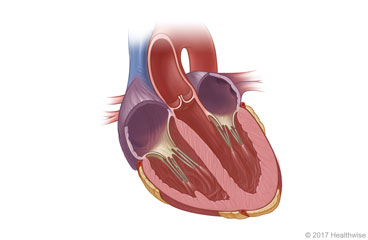
Left heart catheterization is a test to check the left side of your heart. Your doctor might check the
structure of your heart, the motion of your heart, or the blood pressure inside the chambers.
Why is this test done?
This test gives information about how your heart is working. It can:
-
Check blood flow and blood pressure in the chambers of the heart.
-
Check the pumping action of the heart.
-
Find out if a heart defect is present and how severe it is.
-
Find out how well the heart valves work.
How is the test done?
-
You may get medicine to help you relax.
-
You will get a shot to numb the skin where the catheter goes in.
-
A thin tube called a catheter is put into a blood vessel in your groin or wrist. The doctor moves the
catheter through the blood vessel into your heart. -
Dye may be injected into your heart. Your doctor can watch on special monitors as the dye moves in your
heart. The dye helps your doctor see blood flow in your heart. -
If a heart defect is found, cardiac catheterization sometimes is used to repair it during the test.
-
After the procedure, pressure may be applied for a short time to the area where the catheter was put into
your blood vessel. This will help prevent bleeding. A small device may also be used to close the blood
vessel. You may have a bandage or compression device on the catheter site. -
You will stay in a room for at least a few hours to make sure the catheter site starts to heal.
-
If the catheter was placed in your groin, you may lie in bed for up to a few hours. If the catheter was
put in your wrist, you will need to keep your arm still for at least 1 hour.
How long does it take?
The test may take about 1 hour. But you need time to get ready for the test and time to recover. This can
take a few hours.
What happens after the test?
-
You may or may not need to stay in the hospital overnight. You will get more instructions for what to do
at home. -
Drink plenty of fluids for several hours after the test. If you have kidney, heart, or liver disease and
have to limit fluids, talk with your doctor before you increase the amount of fluids you drink.
Follow-up care is a key part of your treatment and safety. Be sure to make and go to all
appointments, and call your doctor if you are having problems. It's also a good idea to know your test results
and keep a list of the medicines you take.
Current as of: June 24, 2023
Content Version: 14.0
Care instructions adapted under license by your
healthcare professional. If you have questions about a medical condition or this instruction, always ask
your healthcare professional. Healthwise, Incorporated disclaims any warranty or liability for your use of
this information.
Related Articles

Cardiac Catheterization: Right
What is it?Right heart catheterization is a test to check the right side of your heart. The right side of...
Right Heart Catheterization: Pulmonary Artery Catheterization: Pre-op
Right Heart Catheterization: Before Your Procedure What is right heart catheterization? ...
Cardiac Catheterization
In cardiac catheterization (often called cardiac cath), a very small hollow tube, or catheter, is advanced from a blood vessel in the groin, arm, or neck through the aorta into the heart. Once it is in place, several diagnostic and treatment procedures can be done using catheterization.
Discharge Instructions for Cardiac Catheterization
This is a procedure to look for blocked areas in the blood vessels that send blood to your heart.