Complications from untreated PID may take many years to develop. The resulting problems can be lasting and painful. PID can also cause lasting damage to the reproductive organs, such as trouble getting pregnant (infertility). The longer PID is left untreated, the more likely these problems are to occur.
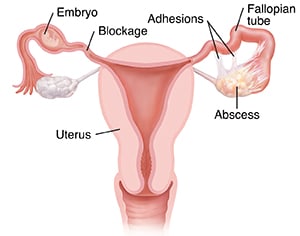
If the infection spreads
PID infection can spread to other parts of the body. Bacteria can leave the fallopian tubes and infect the belly (abdomen). This is called peritonitis. Nearby organs, such as the bowel and the bladder, may become bound together by scar tissue. This can cause pain and can keep organs from working right. In rare cases, PID infection can also enter the blood. This blood infection can be very dangerous. It can even be fatal.
Abscess
The body's immune system forms a pus-filled mass around infected tissue in the fallopian tubes or ovaries. This is called an abscess. An abscess is most likely to form soon after PID infection begins. It can be very painful, and may take months to heal on its own. Many times it will not heal without treatment. If not treated, it can cause lasting damage and pain.
Scarring and adhesions
Infection causes the tubes and ovaries to become inflamed. As inflamed tissue slowly heals, scar tissue forms. The fallopian tubes, ovaries, uterus, or other organs can become bound together by bands of scar tissue. These are called adhesions. Scarring and adhesions can be painful. They may keep the reproductive organs from working right and prevent pregnancy from happening.
Blocked fallopian tubes
The fallopian tubes can become blocked by an abscess, scar tissue, or adhesions. This makes it harder for sperm to meet and fertilize an egg. The cilia in the fallopian tubes may also be damaged. Damaged cilia can't help sperm and eggs move through the tubes. Both of these problems make it much harder for a pregnancy to begin.
Tubal pregnancy
A tubal (ectopic) pregnancy happens when fallopian tube damage stops a fertilized egg from moving through the tube to the uterus. Instead the embryo starts to grow in the tube. The fallopian tube can't stretch like the uterus does. When the embryo reaches a certain size, the tube may burst. This can be life-threatening for the female. It is always fatal to the embryo.
Related Articles

Pelvic Inflammatory Disease
Pelvic inflammatory disease is a bacterial infection of the pelvic organs. It may affect only the fallopian tubes, or it may include all the pelvic organs, the uterus, ovaries, and fallopian tubes. This video explains how this common disease occurs and what steps you can take to prevent it.
Pelvic Inflammatory Disease (PID)
Pelvic inflammatory disease or PID is an infection of a woman’s reproductive tract. Scar tissue grows between internal organs leading to ongoing pelvic pain. It can also lead to ectopic pregnancy.
What Is Pelvic Inflammatory Disease (PID)?
PID is an infection of the reproductive organs. Left untreated, it can cause severe damage to the body, including infertility.
Pelvic Inflammatory Disease (PID)
Pelvic inflammatory disease is an infection of the female reproductive organs. It is most often caused by gonorrhea or chlamydia. If not treated promptly, it can lead to serious health problems.